hidden in plain sight
hidden in plain sight
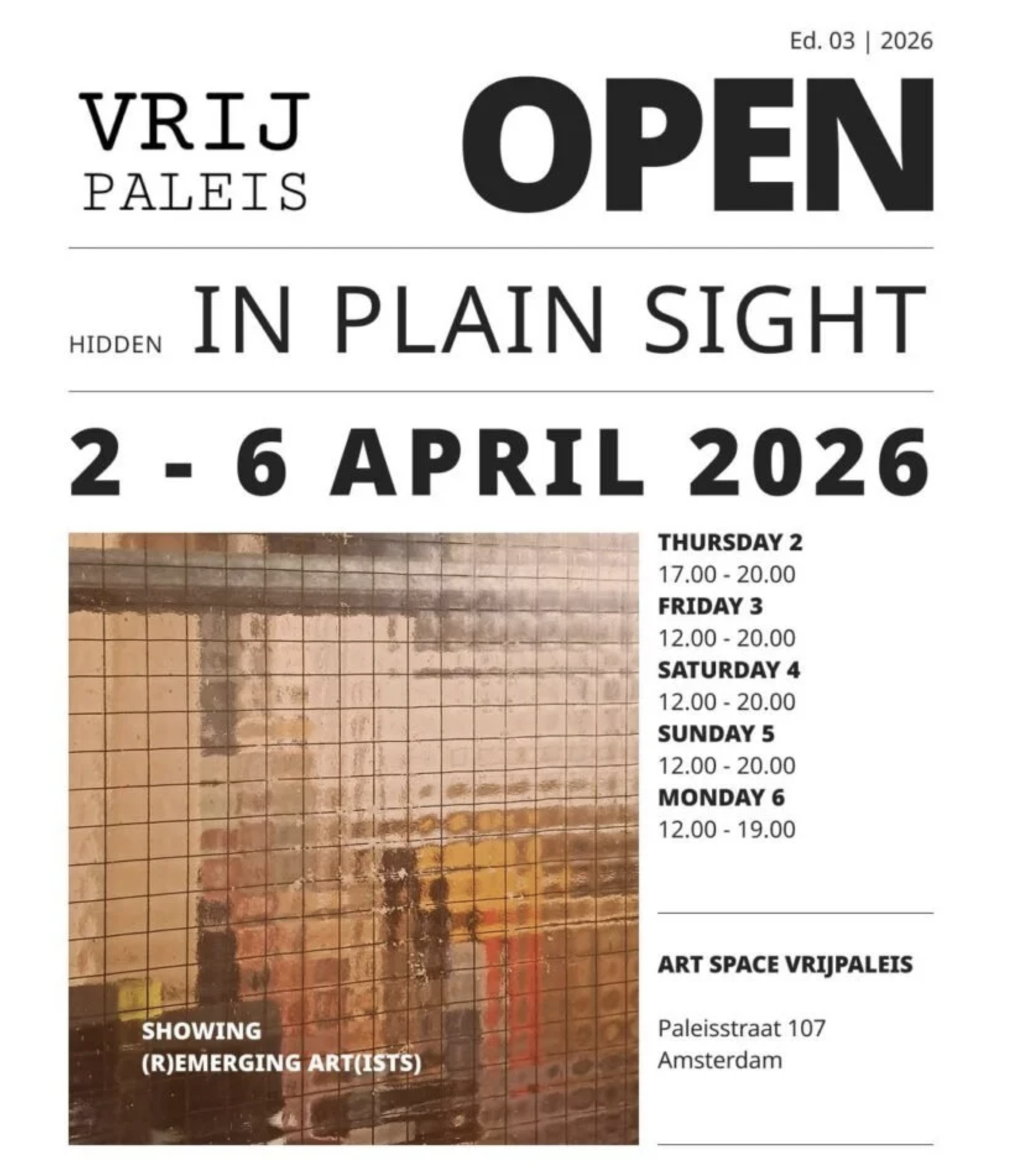
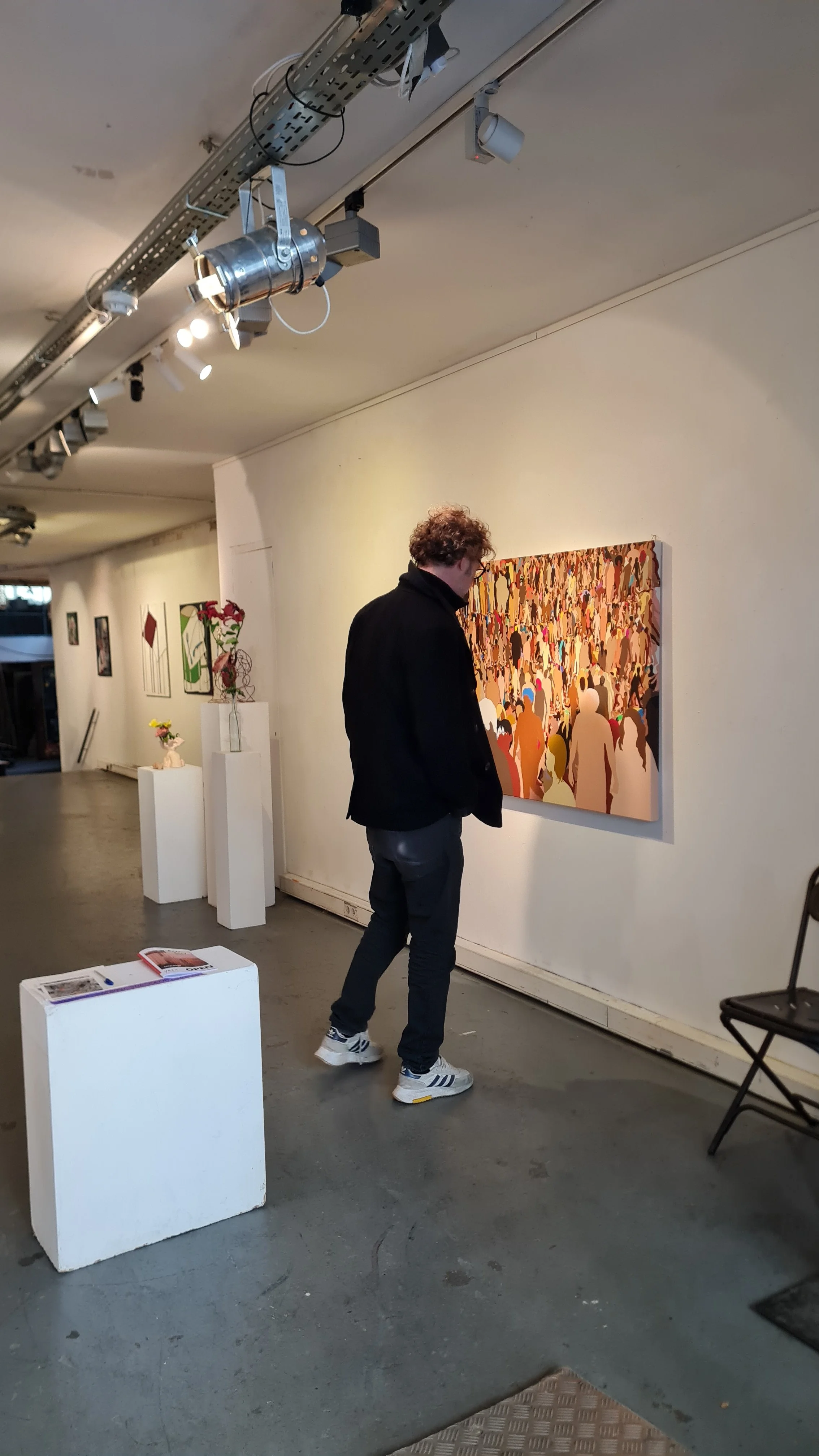
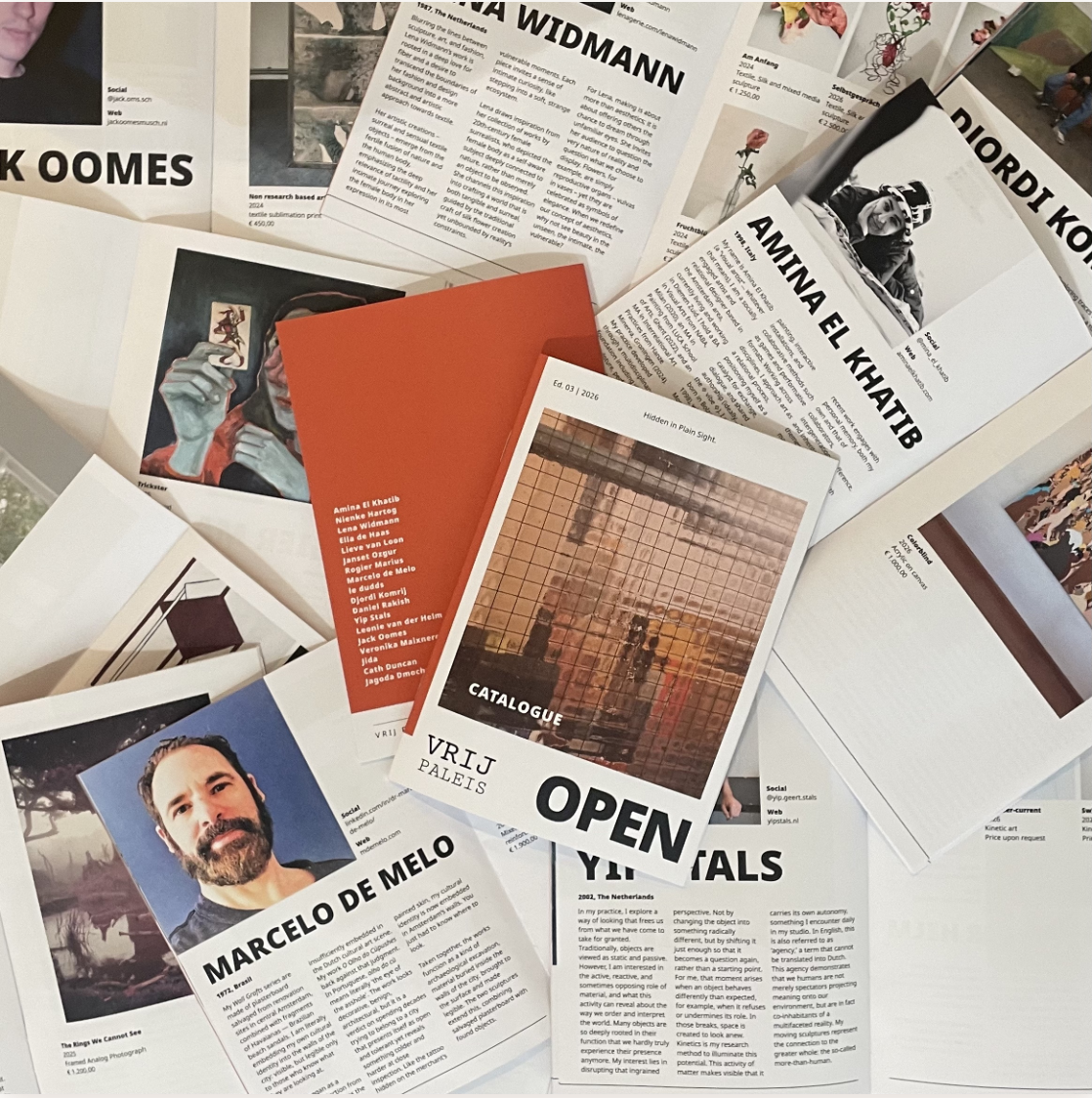
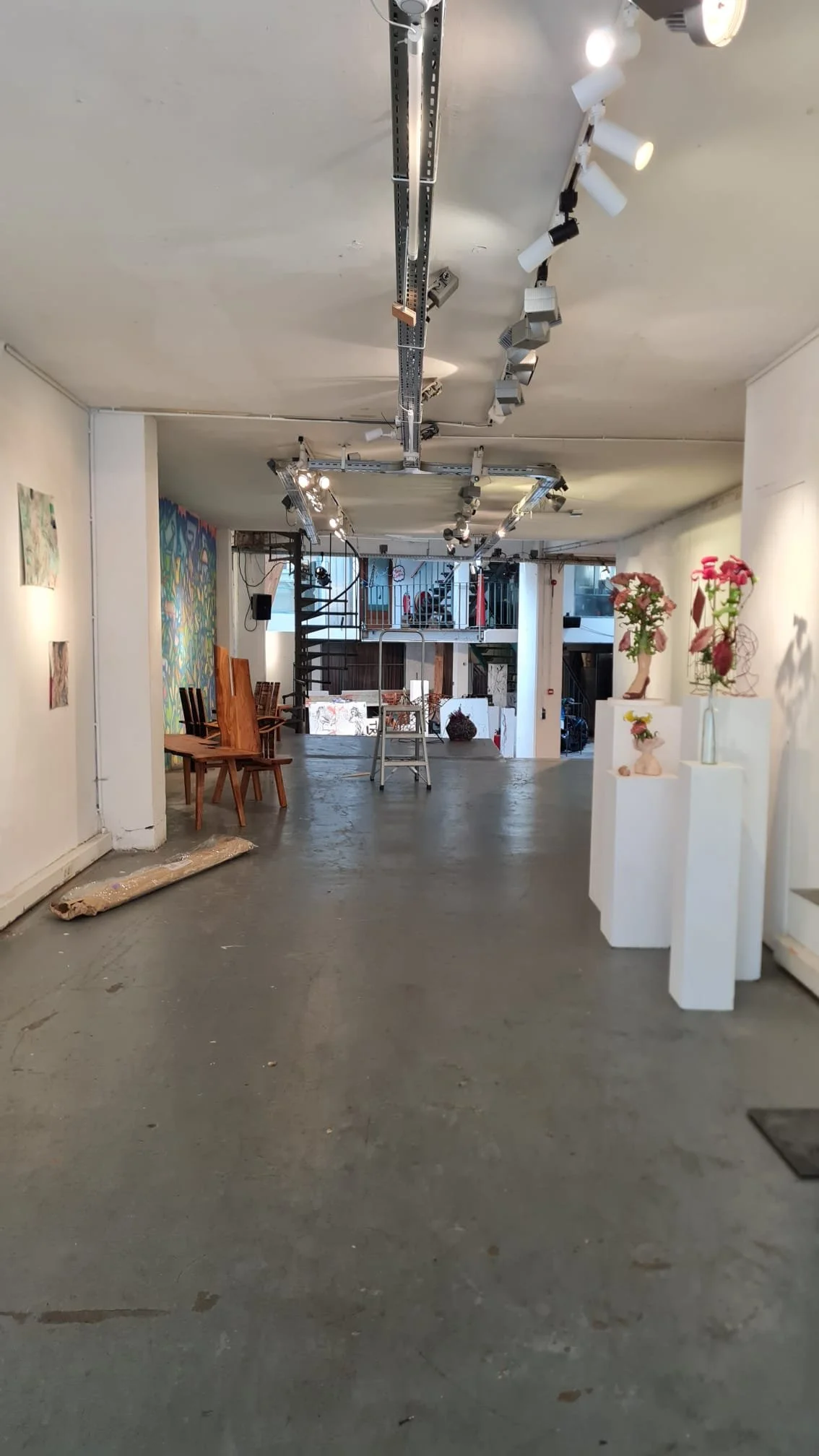
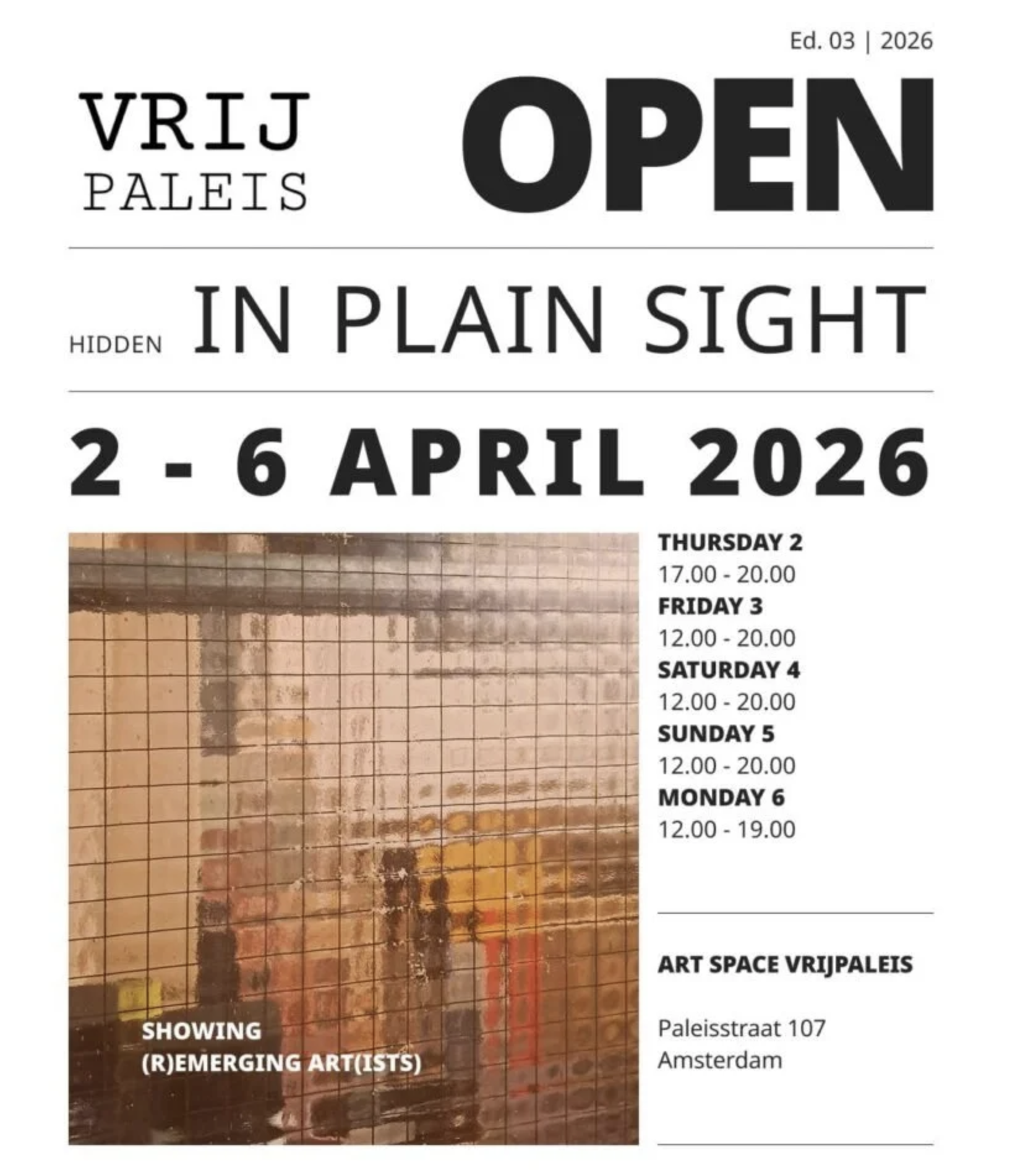
In April 2026, I participated to a collective exhibition at Vrij Paleis in Amsterdam, curated by artist Rogier Bosschaart. The exhibition brought together emerging and re-emerging artists from the Netherlands and internationally, creating a temporary meeting point between different practices, backgrounds, mediums and ways of working.
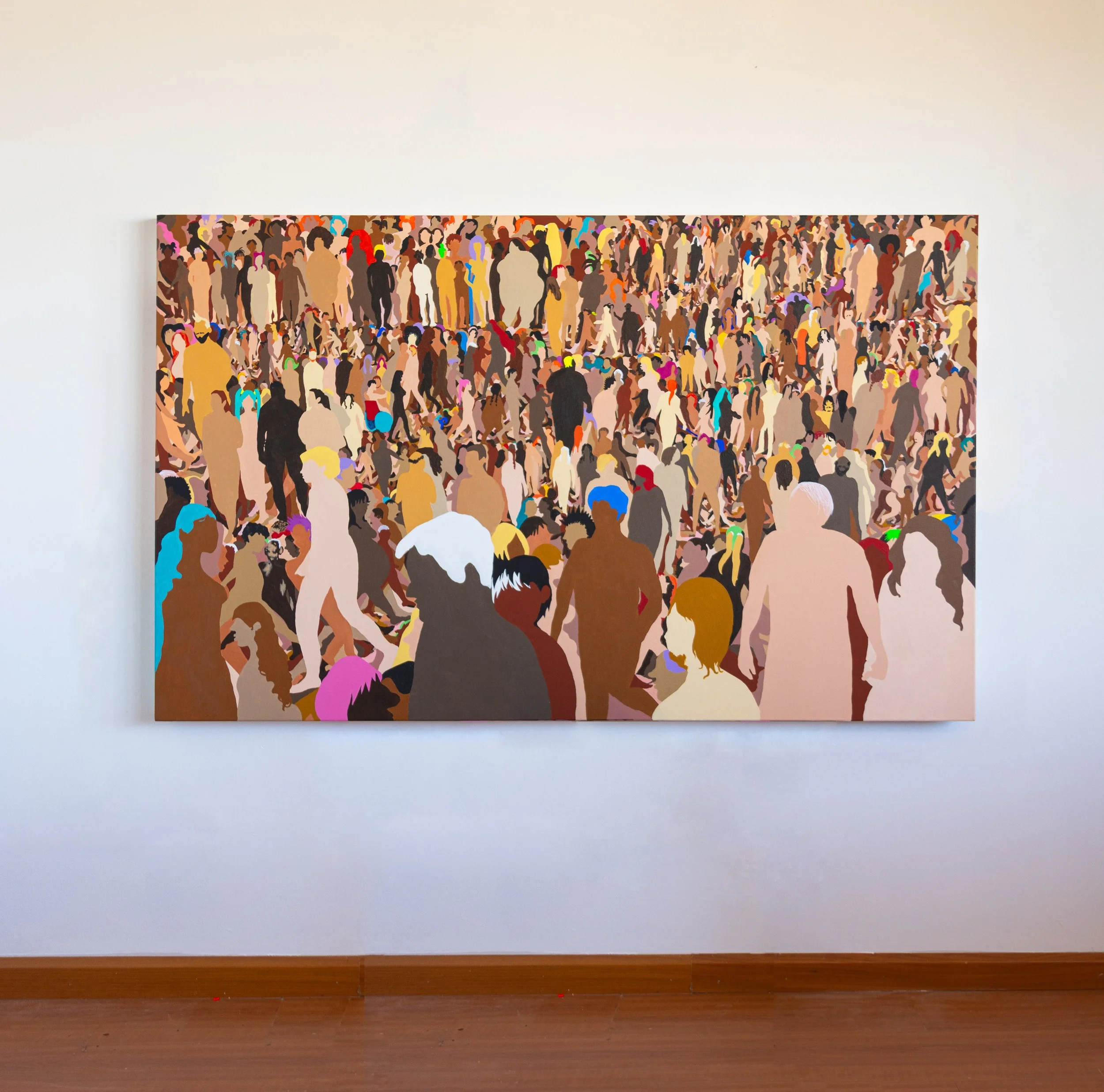
For me, the exhibition was particularly meaningful because it was the first time I presented my painting Colorblind in a group exhibition.Colorblind is an acrylic painting on canvas about identity, and about how identity exists in correspondence with everything around us. Most of the time, in the middle of this frenetic life, we forget about our bodies until someone else reminds us that we have one. Suddenly we become aware of ourselves again. We come back into our body.A body is a body, but its shape, skin tone and context can radically influence how that body is treated and allowed to exist. Racism, ableism, transphobia, pretty privilege and many other forms of discrimination are all examples of how apparently visible differences can acquire very real consequences.
The colours disappear when the painting is viewed from a distance, but they return when you approach it. Perhaps this is the contradiction I am looking for: wanting to disappear into a crowd while still wanting to remain recognisable as yourself.
Moving from a village of around two thousand people to Amsterdam changed my relationship with bodies and space. Here, bodies constantly collide in dense, liminal spaces: concerts, train stations, shopping centres, raves, tiny historical streets where everyone somehow has to squeeze past everyone else. We dissolve and reform constantly. We become part of a mass, part of a flow, almost invisible.
The exhibition's wider programme also included talks and presentations about tattoos throughout history, including discussion of the recent discovery of a tattoo depicted on the wrist of a prominent Amsterdam merchant in a seventeenth-century painting by Wallerant Vaillant (1623–1677). I found this conversation particularly relevant to Colorblind, as it opened another way of thinking about how bodies carry signs, histories and identities, and how those marks influence the way we read one another.
hidden in plain sight
Group exhibition at Vrij Paleis in Amsterdam
2026